
USE CODE {BRIGHTONSC20} At the Figure Skating Boutique for a discount on your equipment purchase for the upcoming season!
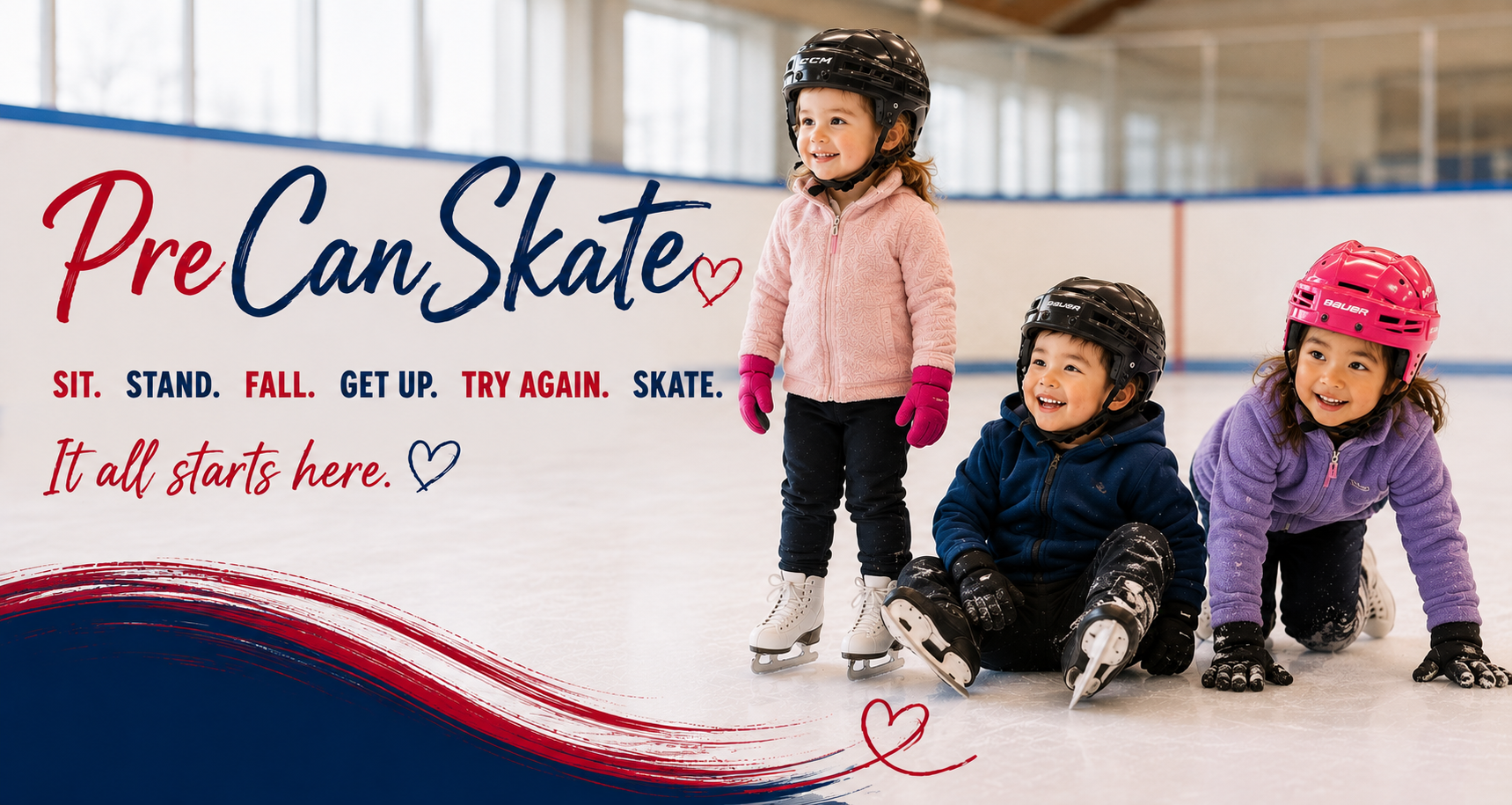
Welcome to PreCanSkate!
Little Skaters. Big First Steps.
PreCanSkate is designed for our youngest beginner skaters who are just starting their skating journey.
If your child is between the ages of 3-5 and has never been on skates before, this is the place to start.
The goal of PreCanSkate is simple: help your child become comfortable on the ice, develop balance and confidence, and begin moving independently.
There is no rush. Every child learns at their own pace.
What Will My Skater Learn?
Before skaters can work through the full CanSkate program, they need to become comfortable simply being on the ice.
In PreCanSkate, we work on those important first skills:
- Getting comfortable standing on the ice
- Learning how to fall and get back up
- Developing balance on skates
- Taking their first steps independently
- Beginning to move forward on the ice
- Learning to participate safely in a group skating environment
- Building the confidence needed to try new skills
These may seem like small accomplishments, but they are the foundation for everything your skater will learn next.
New to the Ice? Here’s What to Expect
For some children, the rink is exciting from the moment they arrive.
For others, it’s a completely new world.
Skates feel different. The ice is slippery. Their helmet may feel strange. They’re surrounded by new people, sounds and activities — and suddenly they’re being asked to balance on something they’ve never stood on before.
It is completely normal for this to take time.
During the first few sessions, your child may spend time sitting on the ice. They may be hesitant to stand. They may hold tightly to a coach or Program Assistant. They might happily participate one week and feel unsure again the next.
All of that can be part of learning.
Think about learning to ride a bike: we don’t expect a child to pedal independently the second time they sit on one. First they learn how it feels. Then they find their balance. Then comes a little movement — and eventually everything begins to click.
Learning to skate is much the same.
Our coaches and Program Assistants will encourage your skater, help them feel safe and introduce skills gradually. Confidence comes before speed, and we want your child’s first experiences on the ice to be positive ones.
So if your little skater spends part of their first few lessons sitting on the ice, don’t panic. They’re still learning.
What Does a PreCanSkate Session Look Like?
PreCanSkate sessions are designed specifically for young beginners.
Coaches and Program Assistants use simple activities, colourful teaching aids, games and lots of encouragement to help skaters become comfortable moving on the ice.
At this stage, success isn’t measured by how fast your child skates or how many skills they complete in a lesson.
Sometimes success is standing up independently.
Sometimes it’s taking three steps without holding someone’s hand.
Sometimes it’s falling down — and deciding to get back up.
Those little victories add up.
When Will My Child Move to CanSkate?
PreCanSkate isn’t just based on age.
Once your skater is comfortable standing independently and begins making forward movement on the ice, our coaching team will assess their readiness for the next step.
When the coach feels your child is ready for the regular CanSkate environment, they will recommend moving them into CanSkate, where they’ll begin working through the full CanSkate skill progression.
Some children reach that point quickly. Others need more time — and both are completely okay.
We want skaters to move ahead when they’re ready, not simply because a certain number of weeks have passed.
Your First Day
Come a Little Early to give yourself some extra time, especially for your child’s first few sessions.
Finding the dressing room, putting on skates, adjusting a helmet, finding missing mittens and getting a young child ready for the ice almost always takes longer than expected!
Arriving early means your child can get ready without feeling rushed and has a few minutes to take in their new surroundings before their session begins.
Pick Up Your Skater’s Name Tag
Pick up your child’s name tag and attach it securely to the outside of their clothing where our coaches and Program Assistants can easily see it.
Please leave the name tag with us at the end of the session so it will be ready for next time.
Keep Your Goodbye Positive
If your child is nervous, that’s okay.
A quick, confident goodbye helps our coaching team begin building a relationship with your skater. We’ll encourage them, help them get comfortable and give them time to adjust.
There may be tears. There may be hesitation. There may also be a very proud little skater coming off the ice thirty minutes later.
Every child is different.
Parents & Guardians — Please Stay at the Rink
A parent or guardian must remain at the arena for the entire PreCanSkate session. PreCanSkaters are young, and sometimes they may need to leave the ice unexpectedly for a bathroom break, an equipment adjustment — or simply because they need a quick break with their grown-up.
If your child needs to leave the ice during their session, a parent or guardian must be available to meet them at the ice entrance.
PreCanSkate is not a drop-off program. Please make sure your skater has an adult at the arena for the full 30-minute session.
Equipment
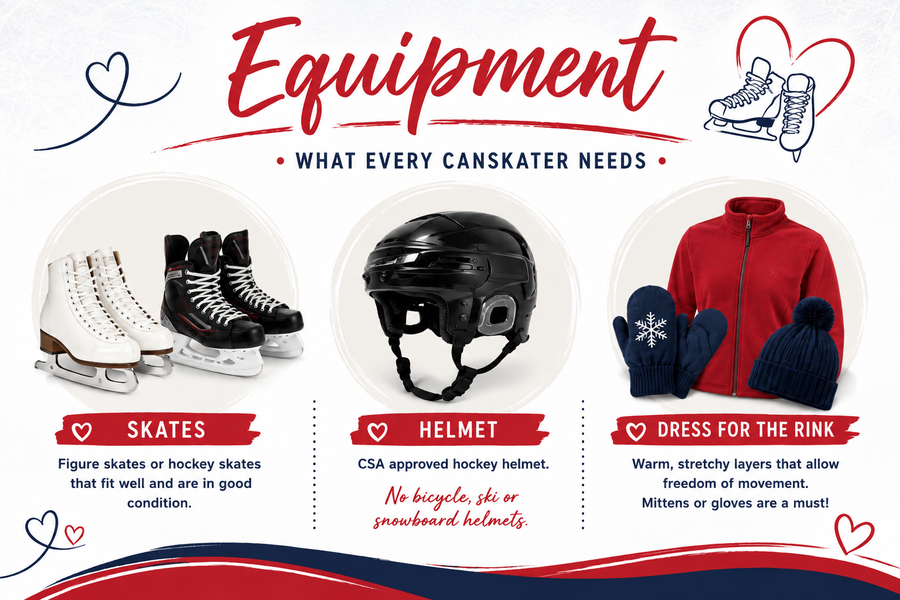
Your little skater doesn’t need a lot of specialized equipment, but the right gear will help keep them safe and comfortable.
Skates
Figure skates or hockey skates are welcome. Skates should fit properly, provide good ankle support and have properly sharpened blades.
Helmet
A CSA-approved hockey helmet is required.
Bicycle, ski and snowboard helmets are not permitted.
What to Wear
Dress your child in warm, comfortable layers that allow them to move freely.
Mittens or gloves are a must — both for warmth and for protecting little hands when getting up from the ice.
Splash pants or snowsuit are perfect for PreCan as they tend to spend some time on the ice.
A Note for Our PreCanSkate Parents
We know it’s tempting to watch from the stands and wonder why your child isn’t standing yet, moving yet or doing what another skater is doing.
Your skater is learning something completely new, and progress at this age doesn’t always happen in a straight line. One week can bring a huge breakthrough; the next may be a little harder.
Give them time.
Celebrate the tiny wins.
And trust the process.
Standing up is progress. Taking one step is progress. Falling and trying again is progress.
Before long, those little steps start turning into skating.
Bottom Content Title
This is an additional section to be able to add content